










Hypnotherapy for stress that goes beyond relaxation. An evidence-based approach to understanding what is driving your stress, building resilience, and getting your life back.
hypnotherapy for stress
You may already have tried the obvious things. Taking a weekend off. Doing the breathing exercises. Getting through the to-do list. Maybe they help for a moment, but before long everything starts to build again.
And still, you keep going. You show up for work, family, clients, responsibilities and everyone else’s needs. From the outside, you may look as though you are coping. Inside, it can feel very different.
Stress can become so constant that you stop noticing how much it is costing you. The tension in your body. The short fuse. The restless sleep. The sense that you are always behind, even when you are doing everything you can.
Therapy for stress is not about telling you to relax more. It is about understanding what is keeping the pressure going, calming the patterns that keep your mind and body on alert, and building practical skills that help you respond differently.
This is where you start feeling like yourself again.
hypnotherapy for stress
Most people expect stress to pass. A difficult few weeks at work, a family issue, a busy season, a period of pressure. Sometimes it does pass, and your body and mind have a chance to recover.
But when stress becomes constant, recovery gets harder. You may still be functioning on the outside, but inside it can feel as though your system never fully settles. Your mind keeps planning, replaying and problem-solving. Your body stays tense. Even rest can feel difficult, because part of you is still braced for the next thing.
You might recognise this in the way you snap more easily, sleep less deeply, feel tired but wired, struggle to concentrate, or reach for anything that gives you a quick sense of relief. It’s not a failing on your part, it’s what can happen when a system designed for short-term pressure is asked to keep going for too long.
Therapy helps by looking at what is keeping the stress cycle going, building skills to steady your response, and helping you make changes that support recovery rather than simply pushing through.
Stress is a normal response to pressure, demand or perceived threat. It prepares your mind and body to act, focus and respond when something feels important or urgent. In the short term, stress can be useful. It can help you meet a deadline, handle a difficult situation or respond to something that needs your attention. Your heart may beat faster, your muscles may tense, your breathing may change, and your attention may narrow so you can deal with what is in front of you.
Stress becomes more of a problem when the pressure does not ease, or when your mind and body don’t get enough time to recover. Instead of rising and settling, the stress response keeps being activated by work, responsibilities, uncertainty, conflict, worry or the constant feeling that there is always something else to do.
Over time, this can affect your sleep, concentration, mood, relationships, health and sense of being able to cope. Therapy helps you understand what is keeping the stress cycle going, and build practical ways to respond with more steadiness and choice.
Stress often continues because the things keeping it active have not changed enough, or because your mind and body have not had a real chance to recover. Common patterns include:
When your mind repeatedly returns to problems, replays difficult moments or tries to solve everything in advance, it keeps the stress response active.
Avoiding situations can bring short-term relief, but it often makes stress more reactive over time and can narrow what you feel able to do.
Stress can disrupt sleep, and poor sleep can make stress harder to manage, creating a cycle that becomes difficult to break without the right support.
A nervous system under constant pressure needs genuine recovery time. Without it, even small demands can start to feel overwhelming.
Stress affects the mind, body and behaviour. It can show up as overthinking, tension, poor sleep, irritability, avoidance, people-pleasing, overworking, emotional eating, procrastination or finding it hard to switch off.
My approach is tailored to you, using evidence-based psychological therapies for stress, including Acceptance and Commitment Therapy, mindfulness, behavioural strategies and Cognitive Behavioural Hypnotherapy.
Acceptance and Commitment Therapy helps you change your relationship with stressful thoughts and feelings, rather than getting caught in constant problem-solving, pressure or self-criticism. We focus on noticing what is happening, making room for difficult experiences, and taking action guided by what matters.
Mindfulness helps create space between stressful events and your response. Rather than pushing harder or avoiding what feels overwhelming, you build the capacity to pause, notice what is happening, and respond with more steadiness.
Cognitive Behavioural Hypnotherapy can support stress work by using focused attention, therapeutic suggestion, imagery, mental rehearsal and self-hypnosis skills. This can help you practise calmer, more effective responses to pressure before you need them in real life.
The aim is not to remove every source of stress. It is to help you understand what is keeping the stress cycle going, reduce the strain it places on your life, and build practical skills that support recovery, clarity and confidence.
01
book a free consultation
A relaxed 30-minute call to talk through what has been going on, what you would like to be different, and whether working together feels right. You can ask questions, get a sense of how I work, and take time to decide what you would like to do next.
02
in-depth assessment
Your first full session is 90 minutes. We look at how stress is showing up for you, what may be keeping the pressure going, and how it is affecting your body, sleep, mood, work, relationships or sense of yourself. By the end, we have a clearer picture to work from.
03
a personalised plan
After your assessment, we agree a plan for therapy. This includes what we will focus on, which approaches are likely to help, and what you can practise between sessions, so the work feels clear and purposeful.
04
sessions to fit your life
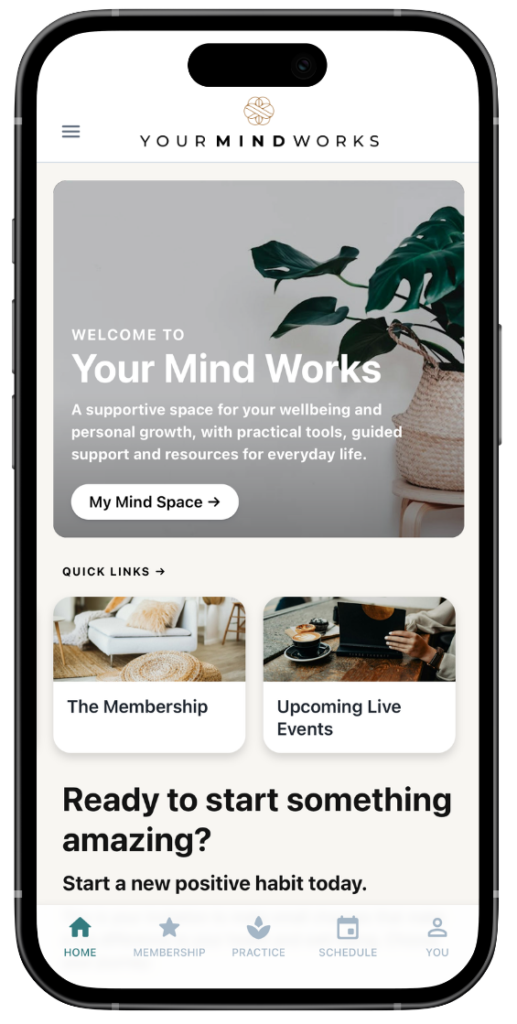
We meet online or in person, depending on what works best for you. Between sessions, you can use the Your Mind Works app for guided practices, audios, exercises and tools that help you keep building skills in everyday life.
Your experience of stress is unique, so the plan we build around it needs to be personal to you. Together, we focus on what has been keeping the pressure going, what it is costing you, and what would help you feel steadier, clearer and more like yourself again. The work is practical, evidence-based and designed to help you build skills you can use in real life. Depending on what matters to you, we may work towards helping you:
Lasting change takes more than one conversation. That is why therapy for stress usually works best when there is enough time to understand what is keeping the pressure going, build the right skills, and practise using them in real life, not just in the therapy room.
We map out what has been happening, how stress is affecting your life, what may be keeping the pressure going, and what you would like to be different.
We work with evidence-based approaches including Acceptance and Commitment Therapy, mindfulness, behavioural strategies and Cognitive Behavioural Hypnotherapy. The focus is on understanding how stress is affecting you, building practical skills, changing your relationship with pressure, and helping you take meaningful steps in everyday life.
This includes your 90-minute in-depth assessment, plus five 60-minute therapy sessions.
You can pay in full, or split the cost into two monthly payments of £300. Booked individually, the same sessions would cost £750, so the programme saves you £150 compared with paying session by session.
Most people start here, and we will confirm together whether this is the right fit during your free consultation.
Individual session rates
90-minute assessment: £150
60-minute therapy session: £120
If we agree that further sessions would be helpful after the programme, additional 60-minute sessions are available at the same reduced rate of £90 per session.
Managing stress is easier when the skills become part of everyday life, not just something we talk about in a therapy session.
As a therapy client, you have your own private space inside the Your Mind Works app. This gives you a simple, organised way to access resources, guided practices and exercises chosen for the work we are doing together.
Inside your private client space, I may share:
Our web-based app means you can easily access on any device with no app store download.
Additional resources, audios and more.
Schedule practices and exercises in your calendar
Your Personal Client Space
Join me for live group sessions
Library full of resources, mind tools, practices and audios.

Your Mind Works web-based app is available on your Apple and Android devices, or easily accessed on your browser and even on your TV.
Lucy Mundy
Your Mind Works
MSc, BSc (Hons) Psychology, HDipCBH, DipSMRB, GMBPsS, MNCIP (reg)
psychologist, integrative psychotherapist + coach
I know how easy it is to keep going because things still need doing, even when your mind and body are telling you the pressure has been too much for too long. Stress can make you feel less like yourself, even when you are still functioning on the outside.
My work is about helping you understand what is keeping the stress cycle going, and building practical skills that make a difference in everyday life. I use evidence-based approaches including Acceptance and Commitment Therapy, mindfulness, behavioural strategies and Cognitive Behavioural Hypnotherapy.
I hold an MSc and BSc in Psychology, a Diploma in Stress Management and Resilience Building, and a Higher Diploma in Cognitive Behavioural Hypnotherapy. I am also a Graduate Member of the British Psychological Society, an accredited mindfulness teacher, and a registered member of the National Council of Integrative Psychotherapists, with over 25 years’ experience across psychology, therapy, coaching and behaviour change.
I aim to make complex psychological ideas easy to understand and usable in everyday life, so you can begin to respond to stress with more clarity, steadiness and choice.
You do not have to have everything figured out before you begin. Most people start with a feeling that something needs to change, and that is enough.
kind words
“
I’ve always felt very relaxed, comfortable & confident.
Safe in your hands.
I felt really supported thoughout and you explained everything really thoroughly and really clearly. I have definitely achieved what I wanted to, with a difference in my ability to relax and to be less worried about things. The biggest change for me is having the courage to be more assertive. I have found therapy has just helped massively. All the different aspects, working step-by-step to get a solution, getting clarity on my thoughts, the audios are just brilliant and the relaxation exercises have all been hugely beneficial too. I always felt very relaxed, comfortable and confident. Safe in your hands. Thank you. It has been amazing. I would absolutely recommend Lucy.
-ST, therapy client
“
I feel like the weight that was keeping me down has gone.
I have been experiencing quite a bit of pain and discomfort, and the practices and hypnosis have helped me release a lot of tension and especially the pain in my shoulder. I feel like the weight that was keeping me down has gone. I have been beating myself up about not doing enough, and feel I should always be doing something – so knowing it’s okay to stop was what I needed.
-EJ, therapy client
“
When I’m in hypnosis, it’s so relaxing.
This was the first time I’ve experienced hypnotherapy, and it was different to what I expected, although I wasn’t quite sure what to expect to be honest! I have been anxious a lot lately, and holding a lot of tension I wasn’t even aware of. I have learnt a lot about relaxation, using my imagination and how to stop struggling with thoughts. When I’m in hypnosis, it’s so relaxing. Your voice is very rhythmical and soothing, which is lovely.
-sw, therapy client
“
Knowing that my mind is just doing things that normal minds do has helped me a lot.
Understanding more about myself and knowing that my mind is just doing things that normal minds do has helped me a lot. I’m now much more patient with myself and know what to do when I start to feel anxious. It’s helped me make sense of so many things. I realised I had more ability to cope than I thought, but I needed help learning how to use those skills in the situations I needed them most. I feel much more confident, and learning self-hypnosis has been really helpful.
-cw, therapy client
“
It’s given me more confidence and the clarity I needed on how to move forward.
Lucy is very knowledgeable, but she is also very calming and super friendly which helps you to feel at ease. Along with Lucy’s guidance and advice it’s given me more confidence and the clarity I needed on how to move forward with my business and also personally. Thank you so much. If you are thinking of working with Lucy you won’t be disappointed.
-CM
There is no single best therapy for stress that suits everyone. The right approach depends on what is keeping the stress cycle going, how it is affecting your body and mind, and what kind of support helps you make changes in real life.
I use evidence-based approaches including Acceptance and Commitment Therapy, mindfulness, behavioural strategies and Cognitive Behavioural Hypnotherapy. The aim is to help you understand stress, reduce the patterns that keep pressure building, and develop practical skills for responding with more steadiness and choice.
Hypnotherapy can be helpful for stress when it is used as part of a clear therapeutic approach.
In my work, Cognitive Behavioural Hypnotherapy uses focused attention, therapeutic suggestion, imagery, mental rehearsal and self-hypnosis skills to support stress work. This can help you practise calmer and more effective responses to pressure, difficult conversations, busy periods, uncertainty or situations where you usually feel overwhelmed.
Hypnosis is not about losing control or switching off completely. You remain aware, involved and able to choose how you respond.
Chronic stress tends to feel different from short-term pressure. Instead of rising and settling, the stress keeps building or rarely seems to fully switch off.
You might feel tired but wired, more irritable, easily overwhelmed, unable to relax, or as though small things take more effort than they should. You may also notice poor sleep, muscle tension, headaches, digestive symptoms, difficulty concentrating, procrastination, emotional eating, or a sense that you are always behind.
If stress is affecting your health, sleep, work, relationships or sense of yourself, it is worth taking seriously.
Therapy for stress starts with understanding how stress is showing up in your life and what may be keeping the pressure going.
We look at your thoughts, physical symptoms, habits, coping strategies, sleep, workload, boundaries, responsibilities and the situations that feel hardest to manage. From there, we build a personalised plan using approaches such as ACT, mindfulness, behavioural strategies, Cognitive Behavioural Hypnotherapy, guided practice and between-session tools.
The aim is to help you understand stress, recover more effectively, and build skills you can use outside the therapy room.
A hypnotherapy session for stress is usually much closer to a structured therapy session than anything you may have seen in stage hypnosis.
We may explore what has been driving your stress, work on the thoughts and patterns that keep pressure building, and use focused attention, imagery, therapeutic suggestion or mental rehearsal to practise steadier responses. You may also learn self-hypnosis skills to use between sessions.
You remain aware and in control throughout. Hypnosis is used to support the therapeutic work, not replace it.
Yes. Online therapy for stress can work very well for many people, especially when there is a clear structure, a good therapeutic relationship and practical work between sessions.
Online sessions can make therapy easier to fit around work, family and everyday life. Many clients also like being able to meet from a familiar space, without travel time or needing to be local.
As a therapy client, you also have access to your own private space inside the Your Mind Works app, where I can share guided practices, audios, exercises and resources chosen for the work we are doing together.
I offer therapy and hypnotherapy for stress online across the UK, and in person from North Warwickshire.
My therapy space may be convenient if you are based near Tamworth, Atherstone, Nuneaton, Burton upon Trent, Ashby-de-la-Zouch, Lichfield or the surrounding Midlands. Online sessions are also available if travelling is not practical.
Yes. I offer stress therapy in Warwickshire online and in person from North Warwickshire.
I work with clients across Warwickshire and the surrounding areas, including Tamworth, Atherstone, Nuneaton, Burton upon Trent, Ashby-de-la-Zouch, Lichfield and nearby parts of Staffordshire, Derbyshire and Leicestershire.
This depends on what you are experiencing, how long stress has been affecting you, and what kind of support will be most useful.
Most people work with me through a six-session stress therapy programme, beginning with a 90-minute in-depth assessment. We review progress as we go, so the work stays focused, relevant and useful.
The six-session stress therapy programme is £600. This includes your 90-minute in-depth assessment, plus five 60-minute therapy sessions.
You can pay in full, or split the cost into two monthly payments of £300. Booked individually, the same sessions would cost £750, so the programme saves you £150 compared with paying session by session.
If we agree that further sessions would be helpful after the programme, additional 60-minute sessions are available at the same reduced programme rate of £90 per session.
Individual session rates are £150 for a 90-minute assessment and £120 for a 60-minute therapy session.
Hypnotherapy is generally considered safe when it is delivered by an appropriately trained practitioner and used within a clear therapeutic approach.
In Cognitive Behavioural Hypnotherapy, hypnosis is a focused state of attention, not unconsciousness or loss of control. You remain aware, involved and able to choose how you respond. It is not suitable for everyone, which is why we discuss your history, needs and suitability during the assessment process.
Yes. What you share in sessions is treated confidentially.
There are very limited exceptions, mainly if there were serious concerns about your safety or the safety of someone else. These situations are uncommon, and I would always aim to discuss this with you first where possible.
That is more common than you might think, and it does not mean therapy cannot help.
Sometimes an approach is not the right fit, or it focuses on talking about stress without enough practical work to help you respond differently in real life. My approach is active and skills-based. We focus on understanding what is happening, building practical tools, and helping you use those skills in the moments that matter.
You do not need to wait until stress becomes unbearable before getting support.
If stress is affecting your sleep, concentration, health, work, relationships, decisions, mood or sense of yourself, it is worth taking seriously. The free 30-minute consultation is simply a chance to talk about what you would like to be different, ask any questions, and find out whether working together feels like the right fit.
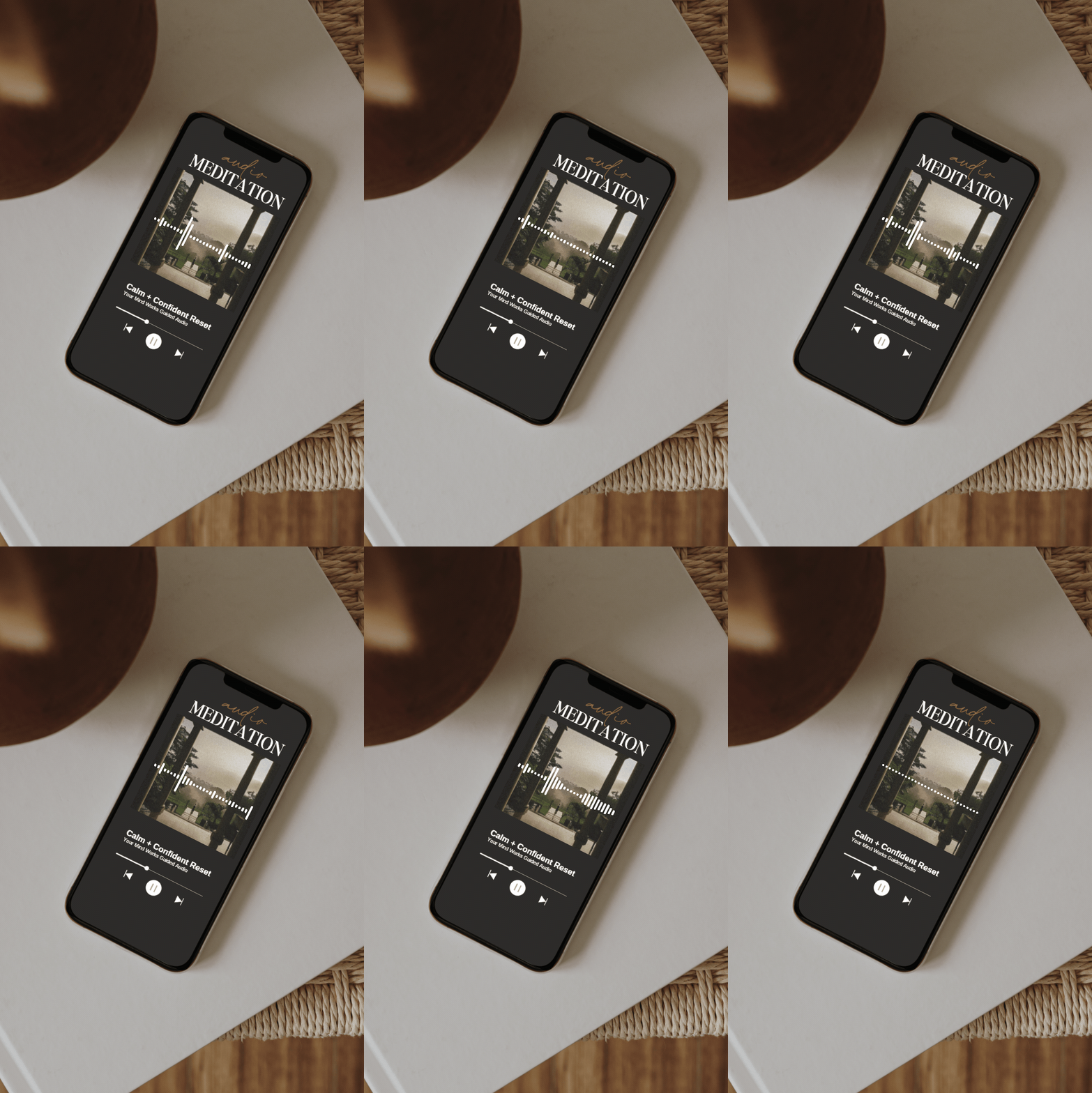
For the moments when everything feels a bit much. This free guided audio combines calming breathing exercises, gentle relaxation techniques, and a guided meditation to help you feel more grounded, steady, and connected to yourself.
A gentle practice designed to help you settle, slow down, and find a little more steadiness. Not forced positivity, just a quiet, grounded reset. No experience needed, simply find somewhere comfortable and set aside 15 minutes for yourself.
Listen whenever you need a moment of calm or want to reconnect with your confidence.
Stress can be exhausting, especially when you have been managing it quietly for a long time. You do not need to have everything figured out before we speak.
The free 30-minute consultation is simply a chance to talk about what you would like to be different, ask any questions, and find out whether working together feels like the right fit.
Sessions available online or in person, in North Warwickshire, convenient for clients in Tamworth, Ashby-de-la-Zouch, Burton upon Trent and the surrounding Midlands area.