Hypnosis is best understood as a focused state of attention, often involving therapeutic suggestion, imagery, and mental rehearsal. In therapy, this can help you practise new responses in a way that feels more vivid, focused, and easier to use in everyday life.
You remain aware, involved, and able to choose how you respond. Hypnotherapy is often associated with stage shows, films, or the misconception that hypnosis means losing control, but evidence-based hypnotherapy is very different.
Cognitive Behavioural Hypnotherapy, or CBH, is an evidence-based, integrated approach to hypnotherapy. It uses cognitive and behavioural principles to understand what is getting in the way, then uses hypnosis to help you actively rehearse different ways of thinking, feeling, and responding.
If you are looking for hypnotherapy in Warwickshire or online, my approach is practical, collaborative, and grounded in psychology. We focus on understanding what keeps the problem going, building skills you can use in everyday life.
Cognitive Behavioural Hypnotherapy uses the focused attention of hypnosis to help you work with thoughts, feelings, sensations, and behaviours in a more direct and experiential way. Rather than simply talking about change, CBH helps you practise it.
Through therapeutic suggestion, imagery, mental rehearsal, and self-hypnosis skills, you can begin to strengthen new ways of responding before you need them in real life. This can support:
In Cognitive Behavioural Hypnotherapy, hypnosis is best understood as focused attention It is the same quality you experience when completely immersed in a film or a book. You are guided to focus your mind, use your imagination, and rehearse helpful responses, while remaining aware and involved throughout.
This way of understanding hypnosis has been there from the beginning. James Braid, a Scottish surgeon who coined the term hypnotism, helped move hypnosis away from ideas of mysterious forces, altered states or hidden powers and towards a psychological understanding of attention, imagination, and suggestion.
He later used the term monoideism to describe the mind becoming focused around a single idea. This can be a helpful way to understand hypnosis in therapy. It is not about switching off. It is about focusing your attention in a way that makes new responses easier to practise, strengthen, and use.
Your mind responds to suggestion, imagery, and rehearsal all the time. If you repeatedly picture something going badly, tell yourself you cannot cope, or mentally rehearse failure, your body and behaviour can start to respond as if that story is true.
Cognitive Behavioural Hypnotherapy helps you use that same capacity more intentionally. Instead of rehearsing fear, avoidance, or self-doubt, you practise new responses that support how you want to think, feel, and behave.
This is not positive thinking. It is applied psychology, using focused attention, suggestion, and rehearsal in a structured, evidence-based way.
Cognitive Behavioural Hypnotherapy offers a practical, evidence-based way to create meaningful change.In our sessions, we work collaboratively, using a range of evidence-based approaches to support meaningful, practical change.
Cognitive Behavioural Hypnotherapy can support a range of issues, especially when thoughts, feelings, habits, sensations, or automatic responses are affecting how you feel, cope, or live your life.
anxiety
Understand what is driving your anxiety, practise responding differently to anxious thoughts and sensations, and build confidence so avoidance no longer has to run your life
stress
When pressure, demands, or a relentless schedule leave you running on empty, therapy can help you calm your body, respond differently to stress, and build resilience.
sleep
Poor sleep is rarely just about sleep itself. We look at the thoughts, habits, and responses that keep the sleep struggle going, so rest can feel more natural again.
chronic pain
Chronic pain affects far more than the body. Therapy can help you understand your response to pain, reduce its impact, and take practical steps towards what matters.
What you are experiencing may not fit neatly into one of these areas, and that is absolutely fine. Cognitive Behavioural Hypnotherapy can also be helpful for:
01
book a free consultation
A relaxed 30-minute call to talk through what has been going on, what you are hoping to change, and any questions you have. It is a chance to get a sense of my approach and decide whether it feels like the right next step for you.
02
in-depth assessment
Your first full session is 90 minutes. We take time to understand what you are experiencing, what may be keeping the problem going, and what you would like to be different. By the end, we have a clearer picture to work from.
03
a personalised plan
After your assessment, we agree a plan for therapy together. This includes what we will focus on, how we will work together, and what may be helpful to practise or reflect on between sessions, so the process feels clear, practical, and purposeful.
04
sessions to fit your life
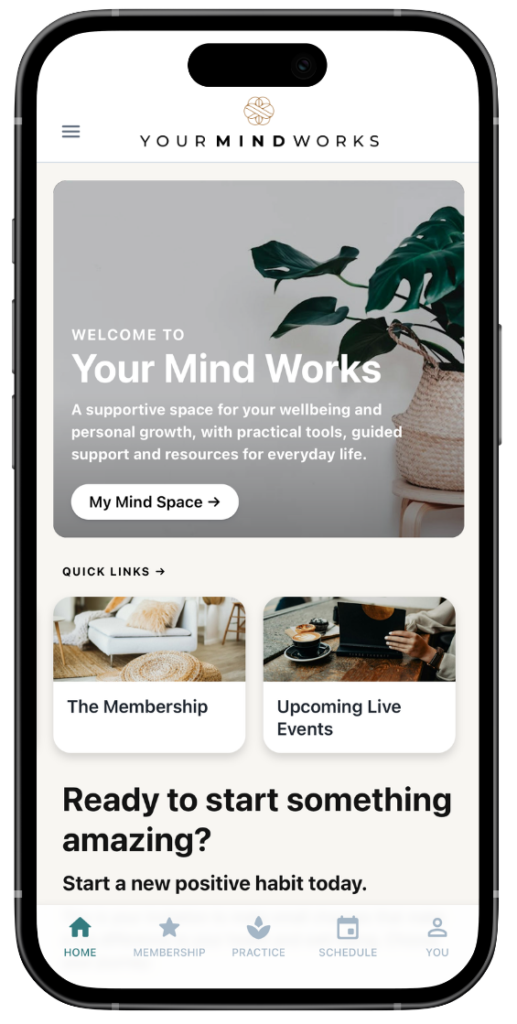
We meet online or in person, depending on what works best for you. Between sessions, you can use the Your Mind Works app for practices, audios and tools that help you keep the work going in everyday life.
Cognitive Behavioural Hypnotherapy is available online across the UK, so you can access support from a private space that feels comfortable for you.
If you are based locally, in-person hypnotherapy sessions are also available from North Warwickshire. I am near the Staffordshire, Derbyshire, and Leicestershire borders, with clients often coming from nearby areas including Tamworth, Burton upon Trent, Ashby-de-la-Zouch, Lichfield, Nuneaton, Atherstone, and the surrounding Midlands.
If you are looking for hypnotherapy in Warwickshire and are unsure whether online or in-person sessions would suit you best, we can talk this through during your free consultation.
Lucy Mundy
Your Mind Works
MSc, BSc (Hons) Psychology, HDipCBH, DipSMRB, GMBPsS, MNCIP (reg)
psychologist, integrative psychotherapist + coach
One of the things I value about Cognitive Behavioural Hypnotherapy is that it gives hypnosis a clear psychological framework. It is not about mystery or vague ideas about the mind. It brings together cognitive and behavioural principles, focused attention, suggestion, imagery, and mental rehearsal, so therapy becomes something you can actively practise, not just talk about.
This fits closely with my psychology background and the way I like to work: practical, collaborative, evidence-based, and grounded in real life.
My training in Cognitive Behavioural Hypnotherapy includes an advanced Level 5 Higher Diploma, recognised by the British Psychological Society. I am also a Graduate Member of the BPS and hold an MSc and BSc in Psychology, with over 25 years’ experience across psychology, therapy, coaching, and behaviour change.
My aim is to make complex psychological ideas easier to understand and usable in everyday life. You do not need to have everything figured out before you begin. Most people start with a feeling that something needs to change, and that is enough.
Because life starts when your session ends.
You will have your own private space inside the Your Mind Works app, where I share personalised resources to support what we discuss and practise in sessions.
This might include guided audios, exercises, journal prompts, grounding practices, self-hypnosis resources, and reminders of key ideas from therapy.
Alongside your private client space, you also receive six months’ access to The Membership, with live sessions, workshops, guided practices, and additional resources to support your wider wellbeing.
The app is not another thing to keep up with. It is simply a clear place to return to personalised resources from your sessions, whenever you need them.
Our web-based app means you can easily access on any device with no app store download.
Additional resources, audios and more.
Schedule practices and exercises in your calendar
Your Personal Client Space
Join me for live group sessions inside The Membership
Library full of resources, mind tools, practices and audios.
Your Mind Works web-based app is available on your Apple and Android devices, or easily accessed on your browser and even on your TV.
Cognitive Behavioural Hypnotherapy, or CBH, is an evidence-based, integrated approach to hypnotherapy. It brings together cognitive and behavioural principles with hypnosis, therapeutic suggestion, imagery, mental rehearsal, and self-hypnosis skills to help you practise new ways of thinking, feeling, and responding.
Hypnotherapy is not used as a standalone treatment in this approach. Before using hypnosis, we take time to understand what is happening, what may be keeping the problem going, and which psychological strategies are most likely to help. Hypnosis is then used alongside this wider therapeutic work, rather than instead of it.
Hypnosis in this context is best understood as a focused state of attention. You remain aware, involved, and able to choose how you respond throughout.
A key part of CBH is helping you develop self-hypnosis skills, so you can continue using focused attention, imagery, and helpful suggestion outside the therapy session. The aim is not for hypnotherapy to be something done to you, but to give you skills you can practise and use for yourself.
CBH may be a good fit if you are looking for a practical, structured approach that helps you understand what is happening and practise new ways of responding.
It works best when you are able to engage actively in sessions and practise between appointments, using resources such as guided audios, imagery, self-hypnosis, reflection, or simple exercises linked to what we are focusing on together. You do not need any special ability or previous experience of hypnosis, and you remain aware, involved, and able to choose how you respond throughout.
However, it is not suitable for everyone. Some mental health difficulties, medical conditions, or issues may need specialist or medical support first. Our initial consultation gives us a chance to talk through what you are looking for, whether hypnotherapy is suitable, and what kind of support would be safest and most helpful.
This varies depending on what you are coming to therapy for, how long it has been affecting you, and what kind of support will be most helpful.
Most people begin with a package of six sessions, starting with a 90-minute in-depth assessment. We review progress as we go, so therapy stays focused, practical, and relevant to what you need.
Hypnotherapy is not regulated by law in the UK, which means training, standards, and approaches can vary. It is important to look carefully at a practitioner’s background, qualifications, and professional memberships.
My Higher Diploma in Cognitive Behavioural Hypnotherapy is Level 5 and quality-assured by NCFE, and recognised training by the British Psychological Society. I am also a Graduate Member of the British Psychological Society and registered with the National Council of Integrative Psychotherapists.
Yes. I offer hypnotherapy in Warwickshire, with in-person sessions available from North Warwickshire. I also offer online hypnotherapy across Warwickshire and the wider UK.
I am based near the Staffordshire, Derbyshire, and Leicestershire borders, with clients often coming from nearby areas including Atherstone, Nuneaton, Tamworth, Burton upon Trent, Ashby-de-la-Zouch, Lichfield, and the surrounding Midlands.
Hypnotherapy sessions are collaborative, structured, and practical. We begin by understanding what you want to work on, what may be keeping the issue going, and what kind of change would be useful.
A session may include discussion, cognitive behavioural techniques, ACT-based work, mindfulness, hypnosis, imagery, therapeutic suggestion, mental rehearsal, or self-hypnosis skills. You remain aware and involved throughout.
Most sessions are 60 minutes, with the initial in-depth assessment lasting 90 minutes.
No. In Cognitive Behavioural Hypnotherapy, hypnosis is a state of focused attention, not unconsciousness or loss of control.
You cannot be made to do or say anything against your will. You remain aware, involved, and able to choose how you respond throughout. The experience is usually more like being deeply absorbed in something, while still knowing where you are and what is happening.
Research suggests online therapy to be just as effective as in-person therapy for many of the concerns people bring to therapy, especially when there is a clear structure, a good therapeutic relationship, and practical support between sessions. In Cognitive Behavioural Hypnotherapy, hypnosis is used within this wider therapeutic process, not as a standalone technique.
Online Cognitive Behavioural Hypnotherapy can work very well, particularly if you feel more comfortable connecting from your own space. It can also make therapy easier to fit around work, family, health, or everyday life, without travel time.
With Your Mind Works, online sessions are supported by your own private client space inside the app, where you can access personalised hypnosis recordings, guided practices, exercises, and resources linked to your sessions.
Discover hypnotherapy
If you’re curious about whether hypnotherapy could help, or you’re not sure where to start, you are welcome to book a free 30-minute consultation. We can talk through what is happening for you, answer any questions, and explore whether this approach feels like the right next step.